Neighbor Zero Bet: The Placement Mechanics Nobody Explains
The neighbor zero bet is not a side wager you stumble into—it is a physically placed chip structure on the roulette felt that covers a fixed cluster of numbers surrounding the green zero pocket. If you are still asking how to place it, you are already losing edge to players who understand the split-second layout geometry. This is not a casual bet. It is a precision placement with rigid rules that most casual gamblers get catastrophically wrong.
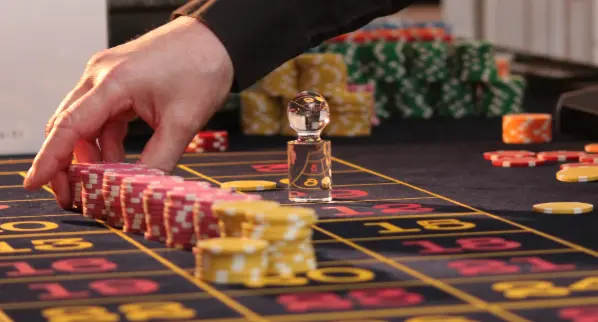
The Physical Geometry of the Neighbor Zero Cluster
On a European single-zero wheel, the neighbor zero bet covers the zero pocket plus a predetermined number of adjacent pockets on both sides of the wheel head. In most house rules, the standard neighbor zero configuration spans five numbers: 0, 32, 15, 26, and 3. But here is where it gets nasty—the placement is not a single chip on a single number. You are physically stacking chips across the racetrack section of the layout, and the dealer must interpret your intent without a verbal declaration.
On the French racetrack betting area, the neighbor zero bet is placed on the curved section that mirrors the actual wheel sequence. You put your chips directly on the line that represents the zero pocket, and the dealer extends coverage to the adjacent pockets according to house rules. Miss the exact line by a millimeter? Your bet gets called as a straight-up zero. That is a catastrophic misplacement that voids your intended coverage. The neighbor zero bet demands you understand the physical racetrack arc, not just the number grid.

Verbal Declaration Versus Silent Chip Placement
Here is the brutal truth: in most high-limit European tables, a silent chip on the racetrack zero line is interpreted as a neighbor bet by default. But in American double-zero roulette, the neighbor zero bet does not exist in standard house rules. You cannot place it. The double-zero wheel has a different pocket sequence, and the 00 pocket destroys the symmetrical neighbor cluster that makes the zero bet viable.
If you are at a French or European table, you can declare "voisins du zéro" or "neighbors of zero" verbally before the spin. The dealer will then place the chips on your behalf across the correct racetrack positions. But if you are at a hybrid table or a low-limit American wheel, that declaration gets you a blank stare or a straight-up zero bet at best. Know your wheel type before you reach for your chips. 🎰
Payout Structure and the Hidden House Edge Trap
The neighbor zero bet pays 17 to 1 on a standard five-number coverage. Wait—that is not a straight 35 to 1 payout. You are covering five numbers with a single unit cluster, and the payout is calculated on the total bet, not per number. The house edge on a European wheel remains 2.7 percent, but the variance profile changes dramatically because you are covering a concentrated arc rather than scattered numbers.
The fatal mistake? Players double their unit size on the neighbor zero bet thinking they are hedging against zero. You are not hedging. You are concentrating risk into a five-pocket window that hits roughly 13.5 percent of the time on a single-zero wheel. That is not a hedge. That is a targeted strike with a specific hit frequency. The placement of neighbor zero bet chips on the racetrack must match the wheel's actual pocket sequence, not the table's number grid. Any deviation and the dealer will correct your bet to a lower-coverage wager.
Racetrack Layout Variations That Break Your Bet
Not all racetrack layouts are identical. Some tables use a compressed arc where the zero neighbor cluster is represented by a single line. Others use an expanded arc with individual pocket markers. The placement mechanics change based on table manufacturer and casino jurisdiction. In Macau, the neighbor zero bet is often placed on a dedicated spot labeled with the cluster sequence. In Monte Carlo, the dealer expects you to know the line without labels.
If you place your chips on the wrong segment of the racetrack arc, the dealer has the right to call a no-bet or convert your wager to a straight-up number. There is no appeal. The eye-in-the-sky reviews the tape and confirms the misplacement. Your chips go to the house. The neighbor zero bet placement is a zero-tolerance mechanic. One centimeter off and you are donating to the casino's hold percentage. 💸
Algorithmic Tracking and the Neighbor Zero Frequency Illusion
Modern wheel tracking algorithms analyze pocket frequency across thousands of spins. The neighbor zero cluster appears in 13.5 percent of outcomes on a perfectly balanced wheel. But biased wheels—and they exist in older casinos—can push that frequency to 18 or even 22 percent. That is where the neighbor zero bet becomes mathematically exploitable, but only if you can identify the bias before the pit boss rotates the wheel head.
Most players never track this. They place the neighbor zero bet because it looks sophisticated on the racetrack. That is emotional placement, not mathematical placement. The only valid reason to place this bet is a documented wheel bias toward the zero sector or a dealer signature that consistently lands the ball in the zero neighborhood. Without that data, you are just paying a 2.7 percent tax with extra steps. 🎯
The Dealer Signature Variable in Neighbor Zero Placement
Dealer signature analysis is the final frontier of neighbor zero bet placement. A consistent dealer releases the ball at the same rotor speed and same drop point, creating a predictable landing zone. If that zone overlaps with the zero neighbor cluster, you have a real edge. If it does not, you are burning money on a bet that looks smart but performs like a random number generator.
Track twenty spins. Log the landing pocket. If three or more land in the zero neighbor cluster, the signature is real. If zero or one lands there, the cluster is cold and you should not place the neighbor zero bet until the wheel head is rotated or the dealer changes. This is not superstition. This is pattern recognition with real financial consequences.
The placement itself takes less than two seconds once you know the racetrack geometry. The analysis behind it takes twenty spins and a notepad. Most players never do the work. That is why the house edge stays fat and the neighbor zero bet remains a mystery to the masses.