Neighbor Zero Bet: The Mathematical Trap Most Players Ignore
The neighbor zero bet is not a casual spread — it is a chip-placement pattern that covers a fixed arc of the wheel around the green pocket, and if you place it without understanding the house edge on every covered number, you are bleeding money on the layout. The bet is simple on the surface: you place chips on the numbers that physically sit next to the zero on the roulette wheel, not the table layout. But here is where the technical reality kicks in. The arc typically includes 17 numbers on a European single-zero wheel: 22, 18, 29, 7, 28, 12, 35, 3, 26, 0, 32, 15, 19, 4, 21, 2, and 25. That is a 17-number coverage pattern, and the chip distribution is never uniform.
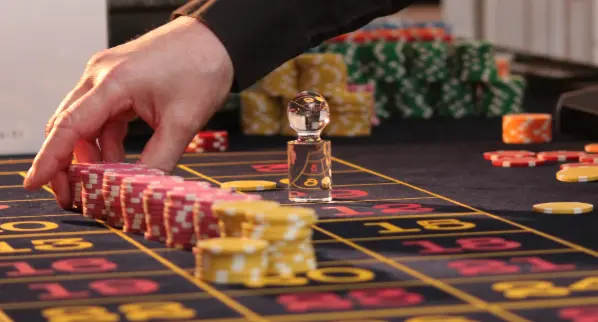
Most players assume the neighbor zero bet is a single bet type. Wrong. In reality, it is a composite wager that requires you to place chips across multiple straight-up positions simultaneously. On a European wheel, a standard neighbor zero bet calls for a total of 9 chips: 1 chip on the 0, and 2 chips each on 12, 35, 3, and 26. That is the core configuration. Some operators and high-roller rooms use a broader arc that extends further out, pushing the chip count to 13 or even 17 units. The moment you deviate from the standard 9-chip pattern, your risk profile changes exponentially. 🎯
How Do You Actually Place the Neighbor Zero Bet on the Table
You do not stack chips on the felt. You call the bet. The neighbor zero bet is a announced bet or call bet, meaning you verbally declare it to the dealer before the spin. The dealer then places your chips on the physical numbers on the layout that correspond to the neighbor arc on the wheel. On most European tables, the dealer will place 9 chips in the pattern I just described. On French roulette with the racetrack layout, the neighbor zero bet is placed directly on the racetrack band rather than the main layout. This is a critical distinction. If you are playing on an American double-zero wheel, the neighbor zero arc changes completely — you are now dealing with a 5-number spread that includes 0, 00, and the adjacent numbers, which is a completely different beast with a much higher house edge.

The technical execution requires you to specify the bet clearly. Say "neighbor zero, nine chips" or "voisins du zéro" if you are on a French table. The dealer will confirm the chip denomination and then place the chips. If you are on an electronic terminal, the neighbor zero bet is usually available as a pre-set button, but the chip distribution is locked into the standard 9-chip pattern. No customization allowed. 💰
Why the Neighbor Zero Bet Is a Sucker's Play in Disguise
Here is the part the glossy guides will never tell you. The neighbor zero bet covers 17 numbers on a 37-number wheel, which gives you a 45.9% chance of hitting at least one number. That sounds decent. But the payout structure is brutal. When the ball lands on the 0, you get 35:1 on a single chip. When it lands on 12, 35, 3, or 26, you get 17:1 on two chips. When it lands on any of the other 12 numbers in the arc, you get 11:1 on one chip. Run the math and the expected value is identical to every other roulette bet: -2.7% on a European wheel. The neighbor zero bet does not reduce the house edge. It only changes the variance. You are trading a higher hit frequency for a lower average payout. That is it.
The real problem is that most players place the neighbor zero bet without calculating the per-number exposure. If you are betting 9 chips on a European wheel, your total risk is 9 units. Your maximum return is 35 units if zero hits, but your minimum return is 11 units if the ball lands on 2, 4, 19, 21, or 25. That means you can hit a number and still lose money on the overall bet if the payout does not cover your total chip outlay. That is the trap. The neighbor zero bet is a high-coverage, low-payout wager that feels safe but bleeds you dry over time. 🎰
The Only Scenario Where the Neighbor Zero Bet Makes Sense
There is exactly one situation where the neighbor zero bet is mathematically justifiable: when you are exploiting a biased wheel. If you have tracked thousands of spins and identified a physical bias in the wheel mechanism that consistently drops the ball in the neighbor zero arc, then the neighbor zero bet becomes a positive expectation wager. But that requires hardware-level analysis, not guesswork. You need spin data, rotor speed measurements, and ball track wear patterns. Without that, you are just another player donating to the house edge. The neighbor zero bet is not a strategy. It is a coverage pattern. Treat it as such.