Dealer Blackjack Rule: What Happens?
When the dealer flips a ten-value card under an ace, the entire table freezes—and that frozen second is where most players lose money without ever touching a chip. The dealer blackjack rule is not a footnote on the felt; it is the mechanical heart of the house edge, and every serious operator knows the exact sequence of events that unfolds the moment that hole card turns into a natural.
The instant a dealer reveals blackjack, the hand terminates. No player action, no hit, no double-down rescue. Your wager is resolved against a two-card 21 that beats everything except your own natural, and even then the payout structure shifts depending on the variant in play. This is the cold arithmetic behind the felt, and it is where dealer blackjack rule compliance separates a clean operation from a liability nightmare.
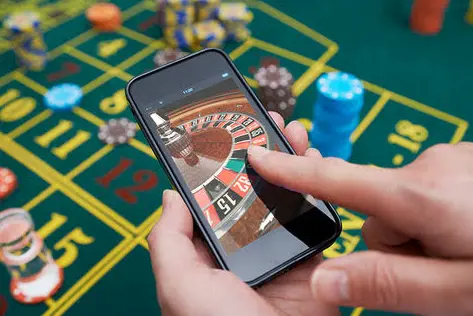
The Hole Card Paradox and Peek Mechanics
American-style tables peek under a ten or ace before any player acts. If the dealer holds a natural, the round is dead on arrival—players lose their original bets immediately, and any side wagers tied to the main hand evaporate. European no-hole-card tables flip the script entirely: the dealer takes only the original wager when blackjack lands, and split or doubled portions are returned untouched. That single mechanical difference is worth roughly 0.11% to the house, and I have watched operators bleed margins for years because their floor staff could not explain it to a whale.
The peek itself is a hardware event. Optical sensors under the shoe read the hole card's rank the moment it is dealt, and the dealer's console locks player action until the software clears the hand. Any operator running a dealer blackjack rule audit must verify that the sensor read and the payout resolution are atomic—if the console logs a peek but the settlement engine processes a player hit, you have a race condition that sharp players will farm within a week. 😤

Payout Asymmetry: The 3:2 Trap
A player natural pays 3:2 on most tables, but a dealer natural during the same round collects every non-natural bet at full value. That asymmetry is the rule, not a bug. The math is brutal and beautiful: the probability of a dealer natural given an ace up is roughly 30.8%, and given a ten up it sits near 7.7%. Multiply those against your table's exposure and you get the true cost of every promotional "dealer blackjack insurance" gimmick some marketing genius dreamed up. Insurance is a separate side bet priced at 2:1 against a 30.8% event—a negative-expectation trap dressed in a friendly uniform. 🎯
Where operators get slaughtered is in variant drift. Double Exposure tables flip the dealer's hole card face up, but the dealer blackjack rule tightens: a dealer 21 after the reveal pushes nothing—it wins outright against all non-naturals, and the house edge balloons past 1% unless you strip blackjack payouts to 6:5. Push 6:5 onto a standard shoe game and you hand the house an extra 1.39%. These are not opinions; they are published combinatorial results, and any floor manager who cannot recite them from memory should not be touching table configuration.
Split Hands, Doubled Wagers, and the Natural Killer
Here is the part that breaks amateur dealers: when you split aces and catch a ten on one, that hand is a 21 but not a natural. The dealer blackjack rule treats it as a regular 21, meaning a dealer natural still beats it. Same for doubled hands—your doubled stake rides on a hand that loses to a two-card 21. The only way to push against a dealer natural is to hold a true two-card blackjack yourself, and the settlement engine must distinguish between a natural and a multi-card 21 at the data layer, not the visual layer. One misclassified hand in a thousand is a rounding error; one misclassified hand per shift is a compliance report waiting to happen.
Operators running live-dealer studios should hard-code the resolution order: natural versus natural pushes, natural versus anything else wins for the dealer, and no player action may execute after a peek confirms a dealer natural. The audit trail must show the peek timestamp preceding the settlement timestamp on every single round. Watch for the tell—if your reporting dashboard shows player doubles resolving on hands where the dealer hole card was a ten-value card under an ace, your dealer blackjack rule logic is inverted somewhere in the middleware, and the leak is silent until a sharp team extracts six figures. 🕵️
The Insurance Side Bet Nobody Should Touch
Insurance exists solely because the dealer blackjack rule creates a moment of fear. The bet pays 2:1 on a 30.8% event under an ace—an expected value of minus 7.7 cents per dollar wagered. No dealer discretion, no soft-count rescue, just pure negative expectation dressed as protection. Live studios that auto-offer insurance on every ace-up hand are optimizing for hold percentage, not player trust, and the sharp money notices within three sessions. The mechanism is transparent the moment you run the numbers, which is exactly why the rule survives: most players never run the numbers.
The final technical point is the one that matters for settlement integrity. When the dealer's up card is an ace or ten and the peek confirms a natural, the round must close before any player decision timestamp is written to the log. Any gap between peek-clear and action-lock is a window where a fast-fingered player or a compromised client can insert a hit, and that gap is measured in milliseconds on good systems and in seconds on cheap ones. Milliseconds is the only acceptable number.